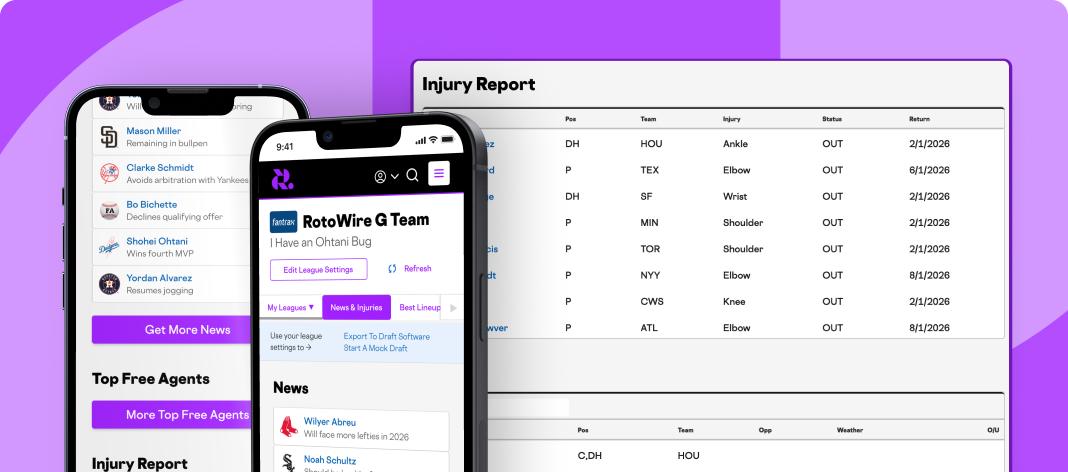
Fantasy baseball managers can run dozens of fantasy baseball mock drafts in the lead-up to their actual draft, but each is unique and can change in an instant if there are draft runs on certain positions. It means that managers need to pivot in a hurry, and using RotoWire's fantasy baseball draft assistant can help detect these runs and allow managers to strategize on the fly as they decide how to respond to those positional runs.
There's no one-size-fits-all approach when responding to runs, but managers can set themselves up for success by utilizing RotoWire's exhaustive list of draft tools, including the draft assistant.
What Draft Runs Are and Why They Happen
Draft runs occur when players at the same position are selected in succession, either with draft picks in a snake format or being called consecutively in an auction format. This typically happens at more scarce positions, where fantasy baseball managers get worried about not getting a quality player at a position that has a few (such as catcher or second baseman).
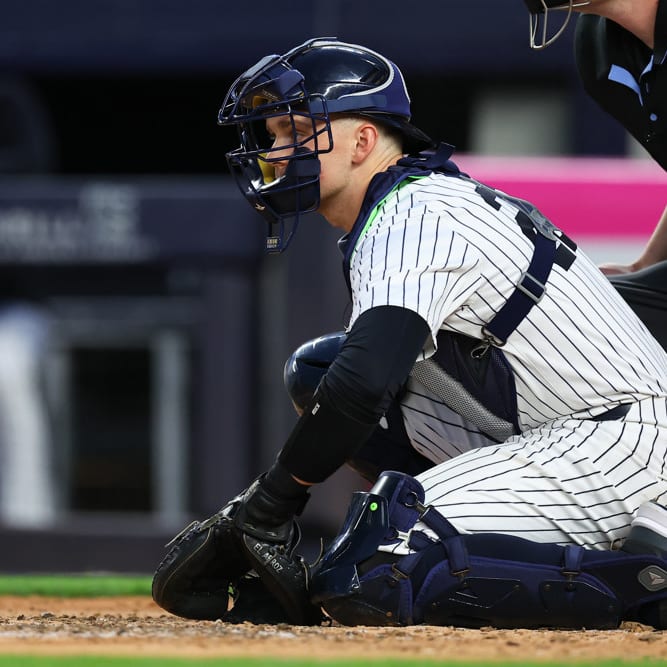
For example, there are only a handful of catchers listed among RotoWire's top 100 standard fantasy baseball rankings. If Cal Raleigh goes off the board and William Contreras goes shortly after, managers may move other catchers up their draft boards and take them earlier than usual, so they aren't stuck with bottom-feeders later in the draft.
"It varies based on the depth of a position group year to year (i.e. it's a really shallow year for
Fantasy baseball managers can run dozens of fantasy baseball mock drafts in the lead-up to their actual draft, but each is unique and can change in an instant if there are draft runs on certain positions. It means that managers need to pivot in a hurry, and using RotoWire's fantasy baseball draft assistant can help detect these runs and allow managers to strategize on the fly as they decide how to respond to those positional runs.
There's no one-size-fits-all approach when responding to runs, but managers can set themselves up for success by utilizing RotoWire's exhaustive list of draft tools, including the draft assistant.
What Draft Runs Are and Why They Happen
Draft runs occur when players at the same position are selected in succession, either with draft picks in a snake format or being called consecutively in an auction format. This typically happens at more scarce positions, where fantasy baseball managers get worried about not getting a quality player at a position that has a few (such as catcher or second baseman).
For example, there are only a handful of catchers listed among RotoWire's top 100 standard fantasy baseball rankings. If Cal Raleigh goes off the board and William Contreras goes shortly after, managers may move other catchers up their draft boards and take them earlier than usual, so they aren't stuck with bottom-feeders later in the draft.
"It varies based on the depth of a position group year to year (i.e. it's a really shallow year for shortstops)," said RotoWire baseball expert Jake Letarski. "In Rotisserie baseball, a category such as saves can also experience a run, where managers will rush to get the last closers available or in general, draft relief pitchers disproportionately high."
How Fantasy Baseball Draft Assistants Detect Draft Runs
RotoWire's draft assistant won't directly flag a run happening at a certain position, but there are features within the tool that will alert managers.
"If you're following your draft using the 'Draft Grid' tab, a run can be visually represented by multiple players in a row at the same position. Second, the main 'Rankings' tab can also be filtered by position to quickly identify when the top players at a position may be disappearing," Letarski said.
This is where it's important that managers are paying attention to each pick while also strategizing with specific tiers. If a certain position is showing up frequently over the last few picks, managers can look to their tiers as well as the MLB projections for the remaining players in those tiers. Then they can determine whether they should move on that position or hold off until later in the draft.
Adjusting Player Values and Tiers During a Draft Run
If a handful of catchers go off the board in the middle rounds, the perceived value of the remaining catchers on the board will rise within RotoWire's fantasy baseball draft assistant. It's important to have a good understanding of your team when these runs occur (for example, if you drafted one of the top catchers you can disregard any movement on other catchers).
This is also where other tools in RotoWire's fantasy baseball draft kit become important. Knowing where sleepers are at a certain position can help players not make a gut-reaction pick on a player ranked too highly because of a recent run, and it allows managers to stay the course on their own personal rankings and still find value on the board when they pick.
"Reactions to runs are due to scarcity, and many owners panicking that they might miss out on having a quality player at that position," Letarski said. "So, most managers will manually value that position higher. They may want to use the Tier/Sleeper feature, or add a player note, to denote the last of a tier."
When to Follow a Draft Run vs. When to Let It Pass
Runs are naturally going to happen in all drafts, though they're more common in snake formats. When they do, it's important that fantasy baseball managers have done enough prep work with other RotoWire tools to be able to understand the run and how it compares to their rankings, tiers, and strategy.
If the players taken as part of their run are trying up a specific tier, or you're in a snake draft and won't be picking for more than a dozen selections, addressing a run might make sense.
If you meet those criteria, you'll want to consider participating in the draft run and selecting that position. In that scenario, you'll get a player of a similar value as the previous few taken at the position," Letarski said. "You can also say with some degree of certainty that a player of that caliber won't be available when the draft comes back to you. As long as it isn't too big of a reach compared to your preset draft value or ADP, go ahead and draft the player."
You'll also want to consider your strategy when runs happen. If you weren't going to focus heavily on saves and instead push for more starting pitching, you don't need to worry about a run on closers. If you love a sleeper second baseman later in the draft, don't panic if the top second basemen start going off the board in succession. Using the categories setting within the draft assistant can help you filter in real-time where you stack up against others.
Using Draft Run Data to Stay Ahead of Your League
You just need to start by subscribing to RotoWire to be prepared. RotoWire's fantasy baseball draft assistant allows managers to see in real-time where they stack up against the rest of the league in categories. This can be an important part of deciding how to attack runs. If you're in good position at a majority of categories, this might allow you to reach on a player at a position where a run is taking place.
If you're still behind in significant categories like home runs, pitcher strikeouts, or saves, you may not have the luxury to reach as part of the run and instead should be focusing solely on MLB player stats to find the best value available.
"You can also attempt to stay out of the run game by identifying players with dual or multi-position eligibility (i.e. a player who can be started at both 2B, SS and OF). This gives you lineup flexibility so you won't necessarily be forced to reach for a player of lower value due to the need to fill a position."
It all comes down to preparation and using the draft assistant as a run is happening to decide which strategy to take. You'll have the data, analytics and context of how a run is impacting you so you can grab the right players at the right time.