2026 World Cup Group F Preview: Netherlands, Japan, Sweden and Tunisia Lineups, Odds, Predictions and Tactics
Group F may be the most balanced group in the competition, which makes it one of the more watchable sections of the draw.
The Netherlands arrive as the group's most complete team, but they carry the familiar weight of a country that has reached three World Cup finals without winning one, and their March friendlies, a 2-1 win over Norway followed by a 1-1 draw with Ecuador, offered both encouragement and the kind of individual errors that can define tournaments.
Japan beat Scotland 1-0 and then went to Wembley and won 1-0 against England, making them the first Asian nation ever to beat the Three Lions.
Sweden qualified in the most theatrical fashion imaginable, Gyokeres winning it in the 88th minute against Poland, having scored a hat-trick against Ukraine the week before, under coach Graham Potter, who has been in the job for less than five months.
And Tunisia arrive under new coach Sabri Lamouchi having won 1-0 against Haiti and drawn 0-0 with Canada in March, carrying the defensive solidity that makes them difficult opponents but the attacking limitations that have defined their previous World Cup campaigns.
This is one of 12 in-depth previews in our 2026 World Cup group preview hub.
World Cup Group F Schedule
NETHERLANDS | 2026 World Cup Tactical Analysis and Predicted Lineup
How the Netherlands Will Play at the 2026 World Cup
Head coach Ronald Koeman has built the Netherlands into one of the more quietly dangerous teams in world football. They are not France or Spain in terms of depth or global profile, but they qualify for every World Cup, they have eliminated World Cup contenders in knockout football across multiple recent tournaments, and their squad for 2026 combines elite defensive quality through Virgil van Dijk and Jurrien Timber with a midfield axis of Tijjani Reijnders and Frenkie de Jong that gives manager Koeman genuine control options. The concern remains attack. Memphis Depay, who surpassed Robin van Persie as the Netherlands' all-time top scorer but was not available for the March window due to a thigh injury, has always been inconsistent at international level. Cody Gakpo provides goals from wide positions. The March results showed what Koeman is working with when the squad is close to full fitness.
The 2-1 win over Norway on March 27 at the Johan Cruijff Arena was a competent performance. Andreas Schjelderup put Norway ahead, Van Dijk equalized with a towering header from a Teun Koopmeiners corner, and Reijnders collected a Denzel Dumfries cross to fire in the winner six minutes into the second half. Four days later in Eindhoven against Ecuador, the test was considerably harder for different reasons. Coach Koeman made seven changes and the match unraveled when Dumfries was shown a red card in the first half. An own goal from Willian Pacho had given the Netherlands the lead, but Enner Valencia's penalty brought Ecuador level and the depleted Dutch side held on for a 1-1 draw. Koeman used the Ecuador game explicitly as a squad depth exercise rather than a first-choice test, and the result should be read accordingly.
The preferred formation is a 4-2-3-1 featuring a double pivot with de Jong and Ryan Gravenberch, Reijnders as the playmaker, and Gakpo as the primary attacking outlet. Dumfries on the right and Micky van de Ven or Nathan Ake on the left give the team dynamic width. The goalkeeper competition among Bart Verbruggen at Brighton or Mark Flekken at Leverkusen is genuine, with Verbruggen appearing to have the slight edge.
The Netherlands' Attacking Style at the 2026 World Cup
The Netherlands' attacking identity is built around a blend of positional intelligence, vertical threat and late-arriving support that consistently destabilizes defensive structures.
Key attacking themes include:
Cody Gakpo as the primary attacking weapon, with the combination of goals, movement and intelligent positioning that makes him one of Liverpool's most reliable scorers and a consistent source of danger in the national team's attacking transitions.
Tijjani Reijnders arriving late from midfield into dangerous areas, his goal against Norway was a textbook illustration, giving the Netherlands an extra scoring threat that opposing midfielders struggle to track.
Memphis Depay (hamstring) if fully fit, adding the experience of a player who has scored more goals for the Netherlands than any other and whose predatory instinct in the box still makes him a genuine threat regardless of his inconsistency elsewhere.
The Netherlands are most dangerous in the first 20 minutes when the tempo is high and the opponent has not had time to set their defensive structure, and from set pieces where Van Dijk's aerial dominance is the most reliable source of goals in the squad.
Several Dutch players are among the frontrunners in the 2026 World Cup Golden Boot odds.
The Netherlands' Defensive Setup
Van Dijk at 34 years old remains manager Koeman's most significant player and the player who sets the tempo of the entire defensive structure. His positioning, aerial dominance and reading of the game remains decent despite Liverpool's difficult season, even if his pace has diminished marginally. Van de Ven alongside him or at left-back brings the explosive athleticism and recovery speed that gives the back line a different dimension, and Timber's return gives the Netherlands their best defensive depth since his breakthrough.
Frimpong or Dumfries at right-back provide the defensive cover and the attacking ability that makes the Netherlands' right side one of the more dynamic in the group. Verbruggen in goal gives the team a young but capable shot-stopper for what should be a largely comfortable group stage run.
Key Tactical Adjustments the Netherlands Need to Make
Find consistency between the first-choice XI and the squad rotation options and manage the competition in every line of the squad since many players in the rotation could be close to starters.
Resolve the striker question definitively before June, as the combination of Gakpo wide and a reliable central finisher determines how dangerous the Netherlands are once they get into good positions.
Manage the fitness of Memphis Depay who could still be a decisive player on set pieces and in the box, despite managing fitness issues and injuries in Brazil.
The Netherlands' 2026 World Cup Predicted Lineup
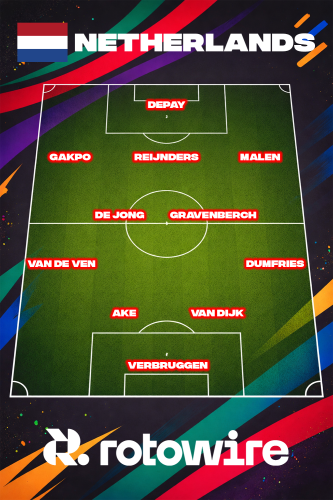
Gravenberch, de Jong; Malen, Reijnders, Gakpo; Depay.
For more updates, see the latest projected World Cup lineups on RotoWire.
The Netherlands' Set Piece Takers for the 2026 World Cup
Corners: Memphis Depay, Cody Gakpo, Teun Koopmeiners, Tijjani Reijnders, Justin Kluivert
Direct free kicks: Memphis Depay, Tijjani Reijnders
Penalties: Memphis Depay, Cody Gakpo, Wout Weghorst
Why This Netherlands Lineup Works
Van Dijk anchors the defensive structure with the authority that has defined club and country across a decade. The double pivot of Gravenberch and De Jong gives manager Koeman the right balance between defensive cover and creative output. Reijnders as the player who will need to create as the No. 10 due to the absence of Xavi Simons (knee). And Gakpo is more than capable of winning a group-stage match on his own. The Netherlands are the group favorites for good reason.
JAPAN | 2026 World Cup Tactical Analysis and Predicted Lineup
How Japan Will Play at the 2026 World Cup
The March window was a statement. Japan went to Glasgow on March 28, beat Scotland 1-0 through a Junya Ito substitute goal in the 84th minute, then traveled to Wembley on March 31 and won 1-0 against England, Kaoru Mitoma dispossessing Cole Palmer, initiating a move that he finished himself in the 23rd minute. England failed to register a shot on target in the first half. Japan defended for their lives when they needed to and were clinical when the chance arrived. Mitoma scored the only goal at Wembley without breaking a sweat and it was the first time an Asian nation had beaten England, and former coach Hajime Moriyasu afterward called it a statement of where this team has arrived: "I want to show the world that we can compete with the best."
The Japan that manager Hajime Moriyasu has built is not the team that made its name in 2022 by beating Spain and Germany before losing on penalties to Croatia. Those results were stunning because they came against the odds. The 2026 version of Japan beats England at Wembley and Scotland in Glasgow without stunning anyone anymore, it is simply what this team does now. The model is a high-pressing system built around intelligent collective movement rather than individual brilliance, with the tactical flexibility to sit deep in a low block against superior opponents and then transition at devastating speed through Ito, Takefusa Kubo and their wide runners. Wataru Endo at Liverpool captains the team from deep midfield and provides the defensive screen that makes the pressing system sustainable, although his fitness will need to be assessed ahead of the competition due to a foot injury.
The preferred formation is a 3-4-2-1 or 3-4-3 depending on the opponent, with three centre-backs, wing-backs who push high in possession, a double pivot in midfield and the front three built around Kubo's creativity. The system was used against Scotland and England and gave both teams real problems, particularly the spacing and timing of Japan's runs in behind when they won the ball high up the pitch.
Japan's Attacking Style at the 2026 World Cup
Japan's attacking structure is built around a blend of individual brilliance, wide dynamism and rapid transitional play that consistently puts defensive lines under stress.
Key attacking themes include:
Takefusa Kubo from Real Sociedad as the creative engine and the player who can produce moments of individual quality that no defensive structure entirely eliminates. His ability to drift inside from wide positions, carry at defenders and find decisive passes gives Japan's attack a dimension that makes them unpredictable even in tight matches.
Kaoru Mitoma (hamstring) suffered a season ending injury that will rule him out for the World Cup, which is a big blow for Japan since no one in the squad has his quality and experience of the Premier League. His absence should allow Junya Ito and Keito Nakamura to get larger roles on the left flank during the competition.
Ayase Ueda as the striker option, with the movement, pressing intensity and finishing ability that gives Japan a central reference point without needing to hold the ball for extended periods.
The wing-backs as attacking outlets when the team controls the ball, with the energy and crossing quality that gives Japan a reliable source of final-third delivery.
Japan's most dangerous attacking moments come immediately after winning the ball in the middle third, when the wide runners are already in motion and the opponent's defensive structure has not had time to recover. That transition speed is the single most consistent weapon in this squad.
Japan's Defensive Setup
The back three of Hiroki Ito, Shogo Taniguchi and Ko Itakura gives Japan the combination of physical presence, defensive composure and ability to play out under pressure that the 3-4-3 system demands. Ito's arrival at Bayern has made the left-sided centre-back position more settled than Japan has had in years. The depth is there in the back line, with Ayumu Seko having a decent season at Le Havre or Tsuyoshi Watanabe bringing European experience.
Endo in the pivot gives the defensive structure its organisational intelligence and its primary ball-winner. Zion Suzuki in goal at Parma has become the first choice across this cycle and showed against England that he can function in high-pressure situations. The system's vulnerability is the same as it has always been under coach Moriyasu, if the pressing is bypassed quickly with a ball in behind the defensive line, the back three's recovery pace is tested.
Key Tactical Adjustments Japan Need to Make
Find the balance between the high-press system that produced the Scotland and England wins and the compact defensive block they will need against the Netherlands, because the Oranje are unlikely to let the possession.
Convert more of the chances created in transition, Japan tend to create more than they score, and at a World Cup, that conversion rate gap can be punishing in tight games.
Manage the wing-back workload across three matches, as the system depends heavily on the physical output of players in those positions over 90 minutes.
Japan 2026 World Cup Predicted Lineup
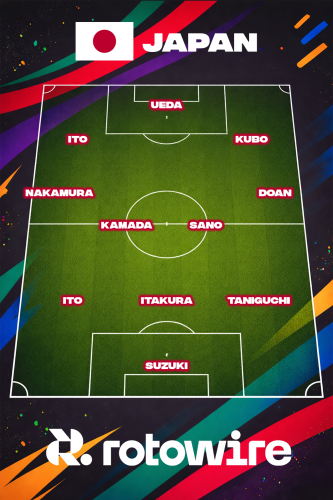
Doan, Sano, Kamada, Nakamura; Kubo, Ueda, Ito.
Japan Set Piece Takers for the 2026 World Cup
Corners: Takefusa Kubo, Junya Ito, Yuito Suzuki, Ryunosuke Sato, Kaishu Sano
Direct free kicks: Takefusa Kubo, Junya Ito
Penalties: Ayase Ueda, Ritsu Doan, Junya Ito
Why This Japan Lineup Works
The back three is decent and has a lot of depth, Endo provides the tactical discipline that gives the rest of the team its freedom, and the wide attacking threats of Kubo and Ito are as good a wide pairing as any team outside of the top eight or ten nations in world football. Suzuki in goal has proven he can handle the biggest stages. And the system itself, press high, win the ball, transition fast, use the width, has now produced victories over Spain, Germany and England in succession. Japan are not a dark horse anymore. They are a genuine contender in this group and a serious threat to anyone in the knockout rounds.
SWEDEN | 2026 World Cup Tactical Analysis and Predicted Lineup
How Sweden Will Play at the 2026 World Cup
The qualification story is possibly the most dramatic of any European team in this tournament. Sweden finished bottom of their qualifying group without winning a single game. Their coach was sacked. The press and public turned ugly and then, through the Nations League back-door, Sweden earned a play-off spot, appointed manager Graham Potter on a short-term deal in October 2025, and managed to survive. Sweden beat Ukraine 3-1 in the semi-final, Viktor Gyokeres scoring a hat-trick, without Alexander Isak (ankle) or Dejan Kulusevski (knee), both injured. Then against Poland in the play-off final, Sweden led twice, were pegged back twice, and Gyokeres poked home in the 88th minute to send the Strawberry Arena into bedlam. Coach Potter's contract was immediately extended to 2030.
Potter had already made Sweden his project before it became chaotic. The 50-year-old built his initial reputation at Ostersunds in Sweden's lower divisions before taking them to the top flight in seven years, and his connection with Swedish football, he speaks the language and understands the culture, gave him credibility that no other foreign manager would have received in the same circumstances. The formation he settled on is a 3-4-2-1 that suits this squad remarkably well: three solid centre-backs, wing-backs who push high, Gyokeres as the focal point and the wide players Anthony Elanga, Kulusevski (knee) if fit, Isak who is back playing with Liverpool in the final stretch of the season, supporting from the two positions behind the striker.
The critical question for Group F is whether Kulusevski, absent through injury since many months, will be fit by June. If the full attack is available and fit, Sweden have the attacking quality to beat any team in this group. If not, manager Potter's 3-4-2-1 is functional rather than frightening, and it will require Gyokeres alone to carry the scoring burden.
Sweden's Attacking Style at the 2026 World Cup
Sweden's attacking structure is built around a well-defined hierarchy of profiles that combine power, pace and technical variation across the front line.
Key attacking themes include:
Viktor Gyokeres from Arsenal as the primary goal threat and the player who carried Sweden to the World Cup through the play-offs. The striker's combination of physical presence, pace, finishing range and instinct in the box makes him one of the three or four most dangerous centre-forwards in this tournament. At Arsenal he has redefined himself as a Premier League-calibre striker after his Sporting CP transformation.
Alexander Isak from Liverpool as another attacking threat, who offers a completely different profile to Gyokeres: technical, smooth, fast, capable of playing deeper and linking. If both are fit together, Sweden have a front-line that few teams in Group F are equipped to manage.
Anthony Elanga from Manchester United as the direct wide threat, with the pace and directness on the right side that gave Sweden their first goal against Poland and their best attacking moments in the play-off campaign.
Lucas Bergvall as the creative midfield option, with the composure and passing quality in tight spaces that gives the 3-4-2-1 its attacking intelligence when Gyokeres is in the box. However, he might not be a starter since coach Potter preferred the pairing of Yasin Ayari and Jesper Karlstrom during the March window.
Sweden's best attacking football comes when the wing-backs are high and delivering crosses, Gyokeres is winning the first ball and the two wide players behind him are arriving into the box. When that sequence clicks, it is very difficult to defend.
Sweden's Defensive Setup
The back-three system under Potter uses three disciplined centre-backs Carl Starfelt, Isak Hien, and Victor Lindelof when available, to provide the aerial authority and positional discipline that allows the wing-backs to push aggressively without leaving the defence exposed. The system was vulnerable during qualifying, and the underlying issue remains: Sweden's defensive metrics were poor across all six qualifying games, conceding 12 goals and clearly struggling with organized opponents who could bypass the midfield screen.
Manager Potter identified the defensive fragility early and built the play-off campaign around minimizing it through compact shape and shorter defensive blocks. The improvement was visible against Poland, where Sweden conceded twice but remained organized enough to win the game. Kristoffer Nordfeldt in goal provides the experience of an established European goalkeeper, though his club form at Galatasaray has been inconsistent.
Key Tactical Adjustments Sweden Need to Make
Manage the fitness of Isak and Kulusevski before June, the gap between this Sweden with both of them and without them is enormous, and it will determine whether they can push Japan or the Netherlands for a higher place.
Tighten the defensive structure further, because the six-goal leakage rate against Switzerland and the group's other strong teams during qualifying was a real problem that coach Potter has worked on but not fully resolved.
Use the opener against Tunisia on June 14 as a must-win and control it properly, because dropping points in that match would put Sweden in a position where they need results against Japan and the Netherlands.
Sweden 2026 World Cup Predicted Lineup
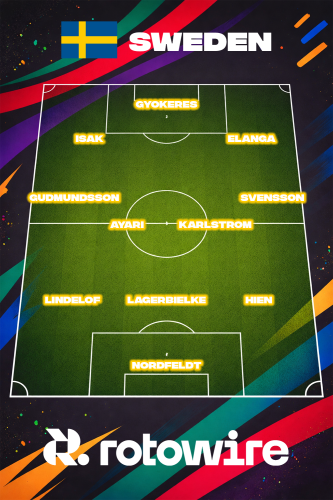
Svensson, Karlstrom, Ayari, Gudmundsson; Elanga, Gyokeres, Isak.
Sweden Set Piece Takers for the 2026 World Cup
Corners: Benjamin Nygren, Yasin Ayari, Anthony Elanga, Emil Forsberg
Penalties: Viktor Gyokeres, Alexander Isak
Why This Sweden Lineup Works
When fully fit, this is one of the most physically and technically dangerous attacking lineups at the tournament. Gyokeres and Isak in front give Sweden a striking partnership that has contributed double-digit combined goals when playing together across all competitions. Elanga, Ayari and Kulusevski give coach Potter options in the advanced midfield positions, and the wing-backs give the 3-4-2-1 its width and delivery. Potter qualified Sweden for the World Cup in fewer than five months in charge, working with what was supposed to be an impossible situation. He will arrive at June with more preparation time, more games behind him and the full squad available. That matters.
TUNISIA | 2026 World Cup Tactical Analysis and Predicted Lineup
How Tunisia Will Play at the 2026 World Cup
Tunisia's presence at three consecutive World Cups (2018, 2022, 2026) reflects a genuine development in Tunisian football, even if their record at the tournament itself has not yet matched the ambition. In 2022, they beat France in their final group game when the starters were rotating, which encapsulated the paradox of Tunisian World Cup football: genuinely capable of causing problems against elite opposition on a good day, but unable to put three consistent performances together across a group stage.
The coaching situation has shifted again. Former coach Sami Trabelsi replaced the previous coach last year, oversaw the AFCON campaign, and was then himself replaced in January 2026 by manager Sabri Lamouchi. The French-Tunisian coach, who has managed extensively in Ligue 1 and internationally, took the job with eight months to the World Cup and used the March window to begin implementing his ideas. Tunisia beat Haiti 1-0 in Toronto on March 28 through a Sebastian Tounekti goal in the seventh minute, and then drew 0-0 with Canada three days later at BMO Field, a result that Lamouchi could reasonably regard as encouraging given that Canada were at home with a larger squad and more preparation context. Coach Lamouchi's preparation calendar for the pre-tournament window includes Austria in Vienna on June 1 and Belgium in Brussels on June 6, two high-level tests that should sharpen the squad's competitive edge before the group games begin.
The system Lamouchi is building from is a 4-2-3-1 or 4-3-3 depending on the opponent, with the defensive solidity that Tunisia have maintained across multiple coaching changes as the base. Ellyes Skhiri at Eintracht Frankfurt anchors the midfield with more than 80 caps of international experience, and the emergence of Hannibal as a genuine attacking midfield option, after loan spells at Burnley and the experience of the Manchester United academy, gives Tunisia something more creative in the middle than previous editions of this squad.
Tunisia's Attacking Style at the 2026 World Cup
Tunisia's attacking identity is built less on sustained possession and more on maximizing the individual quality of a few key players in transition, where technical creativity, direct running and efficient wide play offer the clearest path to breaking down opponents.
Key attacking themes include:
Hannibal as the most technically gifted and creative player in the squad, with the ability to unlock compact defensive blocks through individual dribbling and the key pass. At Burnley, he showed he can function under pressure in top-flight English football, and that experience translates to the international stage.
Khalil Ayari, the Paris Saint-Germain wonderkid who came on as a substitute against Canada, as the wild card, a teenager with the technical quality and directness that could provide moments of genuine unpredictability against any opposition in the group.
Elias Saad as the expected striker reference point, with the movement and goal-scoring record that makes him the most reliable finishing option available to coach Lamouchi.
Wide play through Ali El Abdi and Yan Valery, with the combination of energy, crossing quality and defensive discipline that makes Tunisia's wide positions their most consistent attacking outlet.
Tunisia's best attacking moments tend to come from set pieces and quick counter-attacks following a defensive block rather than sustained possession sequences. Against Sweden on June 14, the group opener for both teams, that style could be genuinely effective.
Tunisia's Defensive Setup
The Tunisian defence has been the foundation of everything manager Lamouchi inherited. Aymen Dahmen in goal has been the first choice across multiple recent campaigns. Montassar Talbi as the defensive organiser gives the back four its structure, and the combination of either Omar Rekik or Dylan Bronn gives Tunisia enough technical quality at centre-back to play out under pressure when the system demands it.
Skhiri's positioning in the midfield pivot is the key to Tunisia's defensive solidity, he covers an enormous amount of ground, breaks up attacks before they reach the back line and organizes the defensive shape when the team loses the ball. The 0-0 against Canada showed that structure functioning well: Canada created chances but Tunisia's block held, and coach Lamouchi will have taken confidence from the way the team competed for 90 minutes against a physically strong opponent away from home.
Key Tactical Adjustments Tunisia Need to Make
Find consistency from Mastouri in the final third, he is the squad's primary finishing option and goals are hard to come by from other positions if he is not converting.
Use the June preparatory matches against Austria and Belgium to test the system against European opposition of genuine quality, because the Netherlands and Japan will be far more demanding than Haiti and Canada.
Treat the Sweden match on June 14 as the group's winnable fixture, approaching it with the defensive discipline and counter-attacking precision that defines this team at its best.
Tunisia 2026 World Cup Predicted Lineup
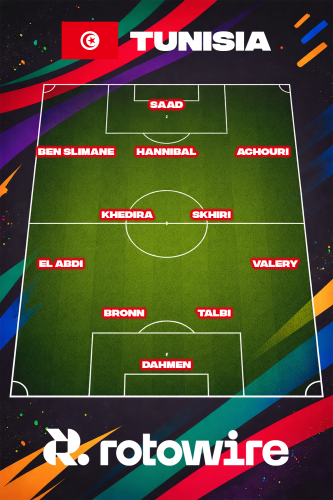
Skhiri, Khedira; Achouri, Hannibal, Ben Slimane; Saad.
Tunisia Set Piece Takers for the 2026 World Cup
Corners: Ali Abdi, Hannibal, Ismael Gharbi, Elias Saad
Direct free kicks: Hannibal, Ellyes Skhiri
Penalties: Ali Abdi, Mohamed Ali Ben Romdhane, Ismael Gharbi
Why This Tunisia Lineup Works
Head coach Lamouchi has a clear tactical identity to build on. The compact defensive block, Skhiri controlling the midfield, and Hannibal with the creative freedom to find solutions in the final third. Dahmen gives the team reliability in goal. The defensive unit is organized and hard to break down. And the moments of quality from Hannibal and, potentially, the young Khalil Ayari give Tunisia the individual unpredictability that can produce a result against any of the three opponents in this group. They will not win Group F. But they are not here to make up the numbers, and the 2022 win over France suggests that on a specific night with everything right, the Carthage Eagles are capable of more than their ranking suggests.
2026 World Cup Group F Odds
The Netherlands are priced as the clear favorites across all books, implying roughly a 55 percent chance to win the group. That reflects their consistency across recent tournaments and the depth of the team.
Japan and Sweden are consistently positioned close to each other, with Japan around 25 percent and Sweden around 15 percent.
Tunisia are priced as clear outsiders with five percent implied probability.
For group-winner odds and predicted lineups across the tournament, visit our full group preview series.
Visit RotoWire for exclusive sports betting picks and our daily World Cup recaps. Remember that betting apps vary in terms of odds, so we have an easy-to-use odds page that allows you to shop for the best lines at DraftKings, FanDuel, BetMGM and PointsBet. Claim over a thousand dollars in bonuses by signing up at the best sports betting sites using the best sportsbook promos.
World Cup Group F Predictions: Who Advances?
The Netherlands win this group. The combination of Van Dijk's defensive authority, the creative quality of Reijnders, and enough attacking depth around Gakpo is too much for any of the three opponents to handle consistently across 90 minutes. The Ecuador result in Eindhoven was an experiment with the squad rotation, not a reflection of what the first-choice XI can do. Manager Koeman has the experience of multiple tournament cycles with this group and will not be caught out in any of the three group matches.
Second place is the group's genuine drama, and it comes down to the June 14 opening day in full. Netherlands face Japan, and Sweden face Tunisia, on the same night. What happens on those two pitches simultaneously will go a long way toward setting the trajectory of the entire group. Japan going to Arlington with the belief of two consecutive wins over England and Scotland and meeting the Netherlands that has been building carefully under coach Koeman is the kind of fixture that could go either way. head coach Moriyasu's system has beaten teams with more individual quality than Koeman's squad, and the Wembley win showed Japan's capacity to defend deep and hit on the counter against exactly the kind of structured possession team the Netherlands prefer to be.
Sweden, for all the chaos of the qualification campaign, have Gyokeres and a 3-4-2-1 system that was working when it mattered most. Manager Potter's contract extension to 2030 suggests Swedish football believes in what he is building, and if Isak is fully fit, the attacking quality is good enough to beat Tunisia and make life difficult for Japan in the final group match on June 25.
Tunisia's realistic path is to take points from Sweden, the June 14 opener is their best opportunity and then absorb the Netherlands and Japan. Coach Lamouchi has enough time before June to sharpen the squad and the competitive schedule includes Austria and Belgium as proper tests. If the defensive structure holds and Hannibal fires, Tunisia can make this group uncomfortable.
For predicted lineups and tactical breakdowns across every group, check our 2026 World Cup preview hub.
Group F Summary
| Netherlands | Japan | Sweden | Tunisia | |
|---|---|---|---|---|
| Predicted formation | 4-2-3-1 | 3-4-2-1 | 3-4-2-1 | 4-3-3 |
| Playing style | Controlled possession, lethal set pieces, defensive solidity through Van Dijk, attacking transitions through Reijnders and Gakpo | High press, rapid transitions, collective intelligence over individual flair, defensive discipline in the low block | Physical attack through Gyokeres, direct wide play, back-three stability, wing-back width | Compact defensive block, counter-attack through Hannibal, set-piece threat, organized midfield screen |
| Corners/FK takers | Depay, Gakpo, Koopmeiners, Reijnders, Kluivert | Kubo, Ito, Suzuki, Sato, Sano | Nygren, Ayari, Elanga, Forsberg | El Abdi, Hannibal, Gharbi, Saad, Skhiri |
| Penalty takers | Depay, Gakpo, Weghorst | Ueda, Doan, Ito | Gyokeres, Isak | El Abdi, Ben Romdhane, Gharbi |
2026 World Cup Group Previews Menu
Click each group for full tactical breakdowns, predicted lineups, betting odds and predictions.
Group A: Mexico, South Africa, South Korea, Czechia
Group B: Canada, Bosnia and Herzegovina, Qatar, Switzerland
Group C: Brazil, Morocco, Haiti, Scotland
Group D: United States, Paraguay, Australia, Turkiye
Group E: Germany, Curacao, Ivory Coast, Ecuador
Group F: Netherlands, Japan, Sweden, Tunisia
Group G: Belgium, Egypt, Iran, New Zealand
Group H: Spain, Cape Verde, Saudi Arabia, Uruguay
Group I: France, Senegal, Iraq, Norway
Group J: Argentina, Algeria, Austria, Jordan
Group K: Portugal, Colombia, DR Congo, Uzbekistan
Group L: England, Croatia, Ghana, Panama