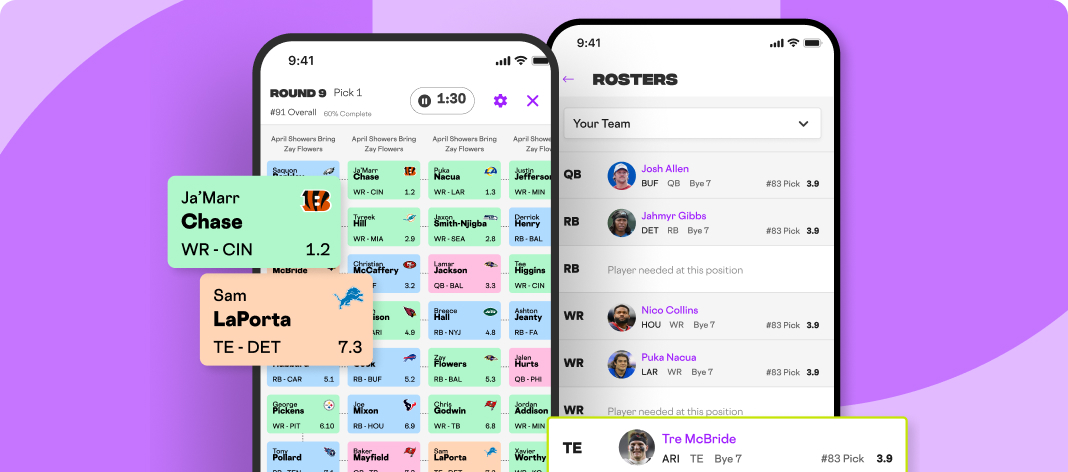


Every fantasy football manager knows the value in using a mock draft simulator such as the one available in the RotoWire fantasy football mock draft tool. Once you participate in a few practice drafts, you'll get a better idea of how you want to draft and how other fantasy managers are likely to draft. That provides enough value to justify investing time in mock drafts, but there are ways you can take your mock draft preparation time to the next level.
We'll cover the various methods to get the most out of a fantasy football mock draft simulator. This review will start with showing you how to practice a fantasy football draft strategy in each of your mock drafts. Next up is using mock drafts to better understand ADP and draft room behavior. We'll then dive into testing draft plans from multiple draft positions, show you how to identify tier breaks and value opportunities and close by detailing how to use mock drafts to refine your fantasy football draft board.
Practicing Different Draft Strategies
Fantasy managers can use a mock draft simulator to test various draft day strategies. This includes approaches such as Zero RB, Hero RB, balanced builds or early quarterback strategies. The fantasy football rankings in each of these draft scenarios will be much different than the others, so it pays to get practice draft time in every environment that you might be apt to use on draft day.
It's also a very good idea to run multiple simulations to help identify which roster constructions work best from different draft positions. For example, if you want to use a Hero RB strategy and end up with the No. 8 draft slot in a 12-team league, you may need to adjust your fantasy football cheat sheet approach to accommodate for a mid-tier RB1 in that role.
"This is the beauty of the mock draft tool – you can try different combinations of your Rounds 1, 2 and 3 players, and then see how the final roster looks, without anything real at stake," said RotoWire fantasy football expert Jake Letarski. "Want to see how your draft looks going WR out of the 4-spot? Done. From there, you can optimize your entire draft strategy based on your favorite final rosters that were generated with mocks."
Understanding ADP and Draft Room Behavior
One of the major benefits of mock draft simulators is that they reflect evolving fantasy football ADP and common draft tendencies. These tendencies are important because they can change depending on the draft platform. For instance, if Yahoo rates a player higher than Sleeper, that player will tend to be drafted earlier in Yahoo leagues than he is in Sleeper leagues.
This information also allows fantasy managers to study when positional runs typically occur and adjust their draft timing accordingly. This works whether you want to be the one starting the run on players at a position or want to be a contrarian and draft players at other positions. When you use this info in conjunction with the RotoWire fantasy football draft assistant on draft day, you will be well ahead of the curve in your draft room.


Testing Draft Plans from Multiple Draft Positions
Most drafts don't let managers know their draft slot until an hour before the draft starts. This uncertainty makes it incredibly important for fantasy managers to practice picking from early, middle and late draft slots. That opening pick has a cascading impact on the roster construction of the rest of your draft, so it pays to use every tool in the RotoWire fantasy football draft kit to prepare yourself for any eventuality.
This includes mastery of the NFL depth charts, especially at the running back position. If you use mock drafts to learn when backup running backs with viable paths to larger work rates will be available, you can stock your RB roster without breaking your draft day bank by taking these potential game winners too early.
"If you don't know your draft spot ahead of time, mock drafting from multiple spots is the only way to make sure you're completely confident come draft day," said Letarski. "You can save all of your results from the RotoWire Mock Draft Simulator, then go back and view them once you know your draft spot. Finding your favorite overall rosters of the bunch will help guide your early-round strategy."
Identifying Tier Breaks and Value Opportunities
It's a good habit to review mock draft results. You don't have to go into great detail, but instead should look for places where major drop-offs are occurring in the RotoWire fantasy football projections. Knowing when the floor is about to move down by a notable amount is a key piece of information that can keep your roster well stocked at the end of a draft.
It's not just the avoidance of downside where identifying tier breaks can be helpful. If you use your subscription to RotoWire to get to know how long a particular tier will stay on the board once a positional run occurs, you can be much more effective in prioritizing players at that position or other positions before that value disappears.
Using Mock Results to Refine Your Draft Board
The best time to do a mock draft is shortly before your draft begins. This will account for the latest information on the NFL injury report plus give you insights you can use to adjust rankings, update cheat sheets and plan backup targets.
The ultimate goal here is to build confidence and flexibility before entering the real draft room. Once you do that, you are all but assured to have the type of draft that will give your team a strong chance at contending for a fantasy title.