2026 NCAA Tournament Bubble Watch: Who's In, Who's Out in the Latest Bracketology
March has arrived, and Selection Sunday is set for March 15, meaning the NCAA Tournament bubble watch is coming into focus. As usual, the teams sitting near the cut line have imperfect resumes, many carrying double-digit losses or missing marquee wins.
Every result matters at this point. One or two additional wins can be the difference between making the NCAA Tournament and being left out of the field entirely.
For a live, updated look at where these teams currently sit, check out our full 2026 NCAA Tournament bracketology on RotoWire.
Metrics prior to games on Thursday, March 5
WATCH: Stream March Madness games live on Sling.
Last Four Byes
 Texas A&M: NET 43, 20-10 Overall, 9-10 Q1/2
 Texas: NET 39, 17-12 Overall, 8-11 Q1/2
Texas A&M and Texas have similar resumes after splitting their season series, making them difficult to separate near the bubble cut line.
The Aggies don't have any bad losses, but 11 of their 20 wins are in Q3 and Q4. While four of their Q1 wins are on the road, all of them are against bubble teams, and their best home win is against Kentucky. As long as they don't lose at LSU on Saturday, they should stay in this range and be fine for Selection Sunday.
Unlike a lot of teams on the bubble, their combination of good wins and not many (if any) bad losses, should keep them safe.
The Longhorns are somewhat similar, though they lost at home to Mississippi State, which rates as a Q3 loss. They're 6-0 in Q1B games, but they have a losing 1-2 record in Q2 games. If they lose Saturday against Oklahoma, they'd likely finish with 14 losses, moving them much closer to the bubble.
 TCU: NET 42, 20-10 Overall, 10-8 Q1/Q2
It was inevitable that TCU would be in this spot. The Horned Frogs opened the season with a home loss to New Orleans, which was followed by almost beating Michigan and then beating both Florida and Wisconsin on a neutral floor. Combined with additional wins against Iowa State and Texas Tech, they should be dancing. However, a home loss to Cincinnati in the regular-season finale followed by a Big 12 tournament loss, and they may be on the wrong side of the bubble.
 Missouri: NET 60, 20-10 Overall, 9-10 Q1/2
The Tigers rank 60 in NET but have a WAB (Wins Above Bubble) at 38. The low NET ranking suggests several close wins combined with a few lopsided losses. They probably aren't in danger of missing the NCAA Tournament with wins against Florida, Kentucky (road) and Texas A&M (road). A home loss to Arkansas on Saturday and then early exit in the SEC tournament could lead to problems.
 SMU: NET 38, 19-11 Overall, 8-11 Q1/Q2
The teams in this section are mostly safe, but if they end the season with multiple losses in a row, anything can happen, especially when bubble thieves inevitably appear. The Mustangs are fine in most metrics, don't have any losses outside of Q1 and Q2, and have a couple nice wins, but 11 of their 19 wins are in Q3 and Q4.
Entering Saturday's now massive game at Florida State, they've lost three in a row, including Wednesday's home loss against Miami.
For up-to-the-minute updates on injuries, roles and overall player performance, head RotoWire's latest college basketball news page or follow @RotoWireCBB on X.
Last Four Teams In
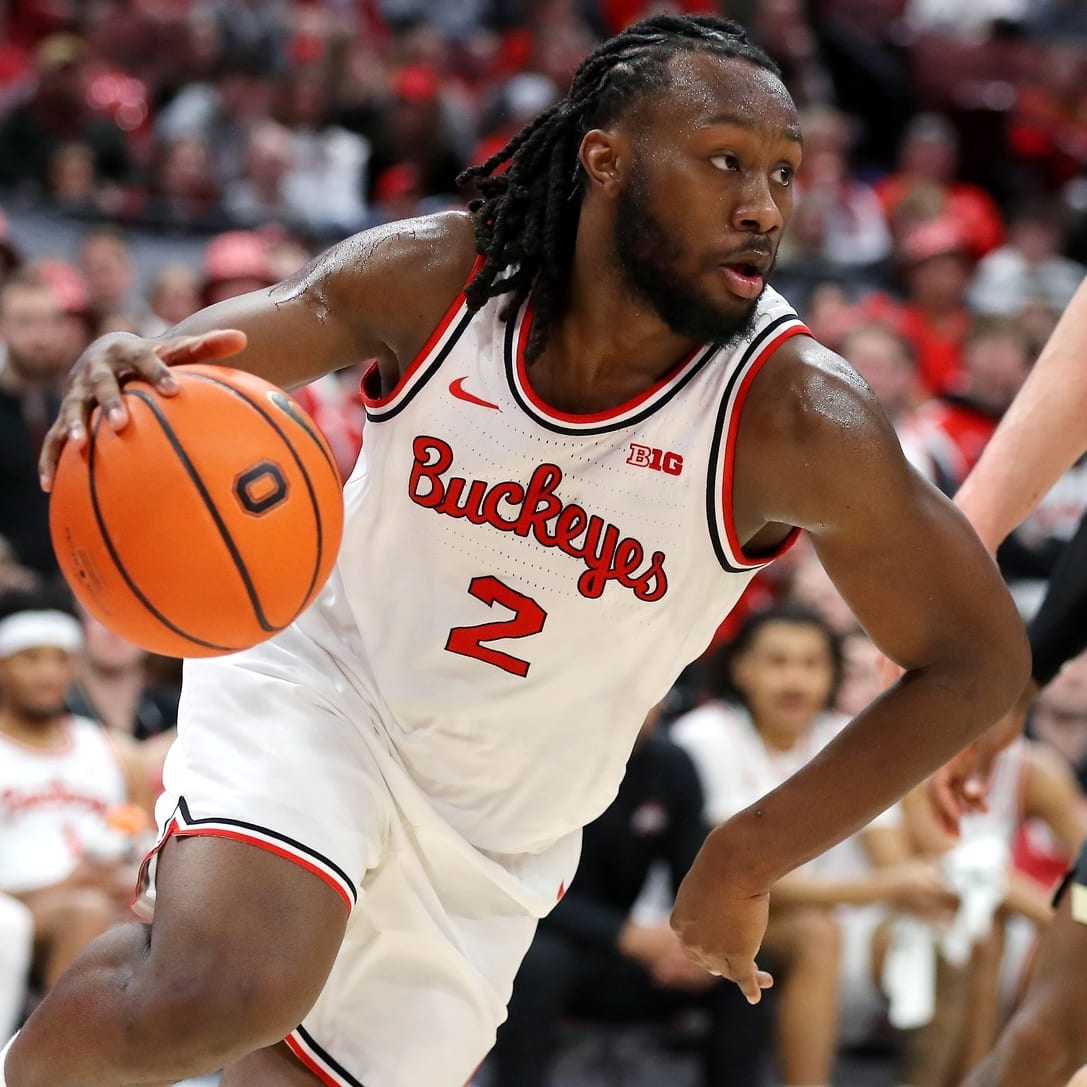
 Ohio State: NET 32, 19-11 Overall, 8-11 Q1/Q2
Like most teams on this list, the Buckeyes are far from safe, no matter what the metrics say. They haven't won more than two games in a row since November, which not only highlights how difficult the Big Ten is but also why they're on the bubble. While only 2-10 in Quad 1 games, nine of those losses came against Quad 1A opponents.
A home loss against Indiana on Saturday could mean 13 losses, and more of a dire situation entering the Big Ten tournament. However, with a win against the Hoosiers, the Buckeyes will be close to a lock given their surrounding competition.
 Indiana: NET 37, 18-12 Overall, 5-12 Q1/Q2
Indiana is not in a good place. After fighting on the bubble for several weeks, it lost at home to Northwestern to close February. Assuming the Hoosiers don't win at Ohio State in the finale, it's possible they'll need one or two wins in the Big Ten tournament to feel better. Given a weak non-conference strength of schedule, it's unlikely they'll be comfortable heading into Selection Sunday no matter how the next week plays out since 13 or 14 losses are likely results.
 Santa Clara: NET 41, 23-7 Overall, 8-6 Q1/Q2
There's always a couple teams from smaller conferences that find their way to the bubble, and they're often difficult to evaluate against power-conference resumes. Santa Clara fits that mold. Its best wins were home against St. Mary's, on a neutral against Minnesota and on the road at Xavier.
The main reason the Broncos are in this spot is because they only have two losses outside of Quad 1, on a neutral against Arizona State and maybe most notably, against NET sub-300 Loyola-Chicago. In order to be less worried about the bubble, they'll need to beat St. Mary's in the WCC tournament. If that doesn't happen, a 25-8 record without many elite wins and a really bad loss could be too much to overcome. Helping them is a Wins Above Bubble rank (43) that is well above Indiana's 48.
 VCU: NET 46, 23-7 Overall, 4-7 Q1/Q2
Being on the outside of the bubble as a small-conference team doesn't usually end well come Selection Sunday. Indiana State had a stronger resume and metrics two years ago yet still missed the field. Nineteen of VCU's 23 wins have come against Quads 3 and 4. If they win at Dayton and then make the A10 tournament final, the Rams will at least be a talking point since most teams around them will keep losing.
First Four Teams Out
 New Mexico: NET 47, 21-8 Overall, 8-6 Q1/Q2
The Lobos are in that same range with a 23-7 record in the Mountain West. Their conference has never lived up to expectations given to them by certain metrics, but they did beat Santa Clara by 27 points in addition to winning games at VCU and Grand Canyon. Yet in an almost must-win game Wednesday at home against Colorado State, they lost by eight points. Losing three home games in MWC play usually isn't a recipe for March Madness inclusion.
Winning at Utah State in the finale would be massive, but either way, they'll likely need at least one or two wins in the MWC tournament to feel better.
 Auburn: NET 40, 16-14 Overall, 8-13 Q1/Q2
No matter what the metrics suggest, it's hard to put a 16-loss team into the tournament. Based off NET and other metrics, they probably should be in the tournament, but losses have to matter, right? There's a chance they finish with 16 losses with a loss at Alabama on Saturday and then another in the SEC tournament.
At that point, you can't put a 16-16 team into the field despite only having three losses outside of Quad 1. If the Tigers win at Alabama, there may be more of a discussion depending on how the SEC tournament unfolds.
 San Diego State: NET 45, 18-10 Overall, 7-9 Q1/Q2
The Aztecs threw away their chance at an at-large bid over the last two weeks, losing four of five games, including home against Grand Canyon. They're 13-6 in the MWC and unfortunately for them, their best non-conference win may have been against Oregon, who aren't a top-100 NET team.
 Cincinnati: NET 44, 17-13 Overall, 8-12 Q1/Q2
Cincinnati might be the best team in this article. The Bearcats have won six of seven games and during that run, rate as one of the better teams in the country, highlighted by wins against three tournament teams in UCF, Kansas and BYU. With a win at TCU on Saturday, they'd have more of an argument.
Of course, they're in this spot because they lost to Eastern Michigan and Xavier in non-conference play while getting swept by West Virginia in the Big 12.
Next Four Out
 Virginia Tech: NET 54, 19-11 Overall, 8-11 Q1/Q2
The Hokies rate as the best team of this bunch, but with a NET near 60, it's hard to consider them. If they win at Virginia on Saturday, that'd do a lot, but they'd also need one, if not two, wins in the ACC tournament.
The benefit of playing in a bigger conference is that you have more chances of getting big wins to close the season. VCU, New Mexico and San Diego State don't have those same opportunities, which is why Virginia Tech still has a chance.
Several other teams remain within striking distance but would likely need deep conference tournament runs to enter the at-large conversation.
USC, California, West Virginia, Seton Hall and Stanford are probably next in line, but they need some magic to have a chance, which means making their conference tournament finals.
The NCAA Tournament bubble picture will continue shifting rapidly over the final week of the regular season and conference tournaments.
For a live, updated look at how these teams are currently projected, along with full seed-by-seed breakdowns, check out RotoWire's complete 2026 NCAA Tournament bracketology.
Check out the RotoWire CBB betting section for a complete list of the latest college basketball odds across multiple sportsbooks.